
SCIENCE DOMAIN

Kate O'Neill
Science Instructional Leader
Our Science program is designed to foster curiosity, critical thinking, and an appreciation of the wider world. Students investigate the structure and behaviour of the physical, biological, and Earth systems through observation, experimentation, and scientific inquiry. Across Years 7–10, Ochre learning materials are used to progressively develop students’ skills in observation, prediction, data analysis, problem-solving, and evidence-based reasoning, while building understanding across the disciplines of Biological Sciences, Chemical Sciences, Physical Sciences, and Earth and Space Sciences.
Students engage in hands-on investigations and explore real-world applications of science, developing the ability to communicate scientific ideas and evaluate information critically. The program encourages students to think scientifically about contemporary issues and to recognise the role of science in shaping society and the environment.
At VCE level, students may further specialise through the study of Physics, Chemistry, Biology, Psychology, and Environmental Science, providing pathways into a wide range of tertiary studies and careers in science, health, engineering, technology, and environmental fields.
Biology 3-4

- Investigate how genetic information is inherited, expressed, and regulated, including DNA structure, gene expression, and patterns of inheritance across generations.
- Explore how cells function as dynamic systems, including cellular processes, homeostasis, and how organisms respond to internal and external stimuli to maintain survival.
- Examine evolutionary biology, including evidence for evolution, changes in populations over time, and the role of natural selection in shaping biodiversity, supported by scientific data and practical investigations.
Subject Code: V2SBI
Year Level: 12
Unit 3: How do cells maintain life?
Students will:
- Analyse the relationship between nucleic acids and proteins, and evaluate how tools and techniques can be used and applied in the manipulation of DNA.
- Analyse the structure and regulation of biochemical pathways in photosynthesis and cellular respiration, and evaluate how biotechnology can be used to solve problems related to the regulation of biochemical pathways.
Unit 4: How does life change and respond to challenges?
Students will:
- Analyse the immune response to specific antigens, compare the different ways that immunity may be acquired and evaluate challenges and strategies in the treatment of disease.
- Analyse the evidence for genetic changes in populations and changes in species over time, analyse the evidence for relatedness between species, and evaluate the evidence for human change over time.
- Design and conduct a scientific investigation related to cellular processes and/or how life changes and responds to challenges, and present an aim, methodology and methods, results, discussion and a conclusion in a scientific poster.
Assessment
- Coursework
- Topic tests
- SACs
- Practical investigations
- Extended practical investigation
- End of semester exam
What sort of student would like Biology?
Someone who:
- Has an interest in the workings of the human body
- Is curious about the role biochemistry plays in the functioning and survival of living organisms
- Wants a better understanding of where life came from and why it shall certainly change in the future
- Is interested in studying health and/or medical sciences or any other aspect of the natural world.
Prerequisites
Biology Unit 1 and 2 and/or Chemistry Unit 1 and 2.
Chemistry 3-4

- Investigate how the structure and bonding of substances determines their properties, and use models of atoms, ions, and molecules to explain chemical behaviour in a range of contexts.
- Explore chemical reactions in depth, including reaction rates, chemical equilibrium, acids and bases, and electrochemical processes, using data and mathematical relationships to analyse systems.
- Examine how chemistry is applied in real-world contexts such as energy production, materials science, pharmaceuticals, and environmental sustainability, supported by practical laboratory investigations and scientific inquiry.
Subject Code: V2SCH
Year Level: 12
Unit 3: How can design and innovation help to optimise chemical processes?
Students will:
- Compare fuels quantitatively with reference to combustion products and energy outputs, apply knowledge of the electrochemical series to design, construct and test primary cells and fuel cells, and evaluate the sustainability of electrochemical cells in producing energy for society.
- Experimentally analyse chemical systems to predict how the rate and extent of chemical reactions can be optimised, explain how electrolysis is involved in the production of chemicals, and evaluate the sustainability of electrolytic processes in producing useful materials for society.
Unit 4: How are carbon-based compounds designed for purpose?
Students will:
- Analyse the general structures and reactions of the major organic families of compounds, design reaction pathways for organic synthesis, and evaluate the sustainability of the manufacture of organic compounds used in society.
- Apply qualitative and quantitative tests to analyse organic compounds and their structural characteristics, deduce structures of organic compounds using instrumental analysis data, explain how some medicines function, and experimentally analyse how some natural medicines can be extracted and purified.
- Design and conduct a scientific investigation related to the production of energy and/or chemicals and/or the analysis or synthesis of organic compounds, and present an aim, methodology and method, results, discussion and conclusion in a scientific poster.
Assessment
- SACs
- Extended practical investigation
- End of year external exam
What sort of student would like Chemistry?
Someone who:
- Has an interest in science
- Wishes to find out more about how chemistry affects the way we live, the food we eat and the energy sources we use
- Wishes to develop their knowledge in how human activities influence and effect the environment.
Prerequisites
Chemistry Unit 1 and 2.
Environmental Science 3-4
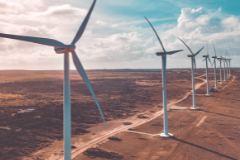
- Investigate Earth’s systems and processes, including atmospheric, hydrological, geological, and biological interactions, and analyse how these systems influence environmental stability and change over time.
- Explore the impacts of human activity on natural environments, including resource use, pollution, biodiversity loss, and climate change, using scientific data to evaluate sustainability challenges.
- Examine environmental management and solutions, including conservation strategies, monitoring techniques, and the role of science in informing decision-making for sustainable futures.
Subject Code: V2SEN
Year Level: 12
Unit 3: How can biodiversity and development be sustained?
Students will:
- Explain the importance of Earth’s biodiversity and how it has changed over time, analyse the threats to biodiversity, and evaluate management strategies to maintain biodiversity in the context of one selected threatened endemic species.
- Explain how sustainability principles relate to environmental management, analyse how stakeholder perspectives can influence environmental decision-making, and evaluate the effectiveness of environmental management strategies in a selected case study.
Unit 4: How can climate change and the impacts of human energy use be managed?
- Analyse the major factors that affect Earth’s climate, explain how past and future climate variability can be measured and modelled, and evaluate options for managing climate change
- Compare the advantages and disadvantages of using a range of energy sources, and evaluate the suitability and impacts of their use in terms of upholding sustainability principles.
- Design and conduct a scientific investigation related to biodiversity, environmental management, climate change and/or energy use, and present an aim, methodology and method, results, discussion and a conclusion in a scientific poster.
Assessment
- Written response to a chosen environmental issue or challenge
- Analysis and evaluation of a case study (local, regional or global)
- Evaluation of a response to an environmental scenario
- Scientific report of student-designed and conducted scientific investigation
- External exam
What sort of student would like Environmental Science?
Someone who:
- Is curious about the natural world and enjoys understanding how Earth’s systems (climate, oceans, landforms, ecosystems) interact and change over time.
- Likes investigating real-world issues such as climate change, sustainability, pollution, and biodiversity, and want to use data and evidence to make sense of complex environmental challenges.
- Prefers applied, inquiry-based learning and is interested in how science can be used to solve global problems and support more sustainable ways of living.
Prerequisites
Environmental Science Unit 1 and 2 and/or Biology Unit 1 and 2.
Physics 3-4

- Investigate the motion of objects and the effects of forces and energy transfer in a range of contexts, applying mathematical models to describe and predict motion in one and two dimensions.
- Explore the behaviour of light and matter, including wave and particle models, and analyse phenomena such as interference, diffraction, and the interaction of electromagnetic radiation with matter.
- Study the structure of atoms and nuclei, including radioactivity and nuclear processes, and examine how principles of physics underpin modern technologies and energy production.
Subject Code: V2SPH
Year Level: 12
Unit 3: How do fields explain motion and electricity?
Students will:
- Investigate motion and related energy transformations experimentally, and analyse motion using Newton’s laws of motion in one and two dimensions.
- Analyse gravitational, electric and magnetic fields, and apply these to explain the operation of motors and particle accelerators, and the orbits of satellites.
- Analyse and evaluate an electricity generation and distribution system.
Unit 4: How have creative ideas and investigation revolutionised thinking in physics?
Students will:
- Analyse and apply models that explain the nature of light and matter, and use special relativity to explain observations made when objects are moving at speeds approaching the speed of light.
- Design and conduct a scientific investigation related to fields, motion or light, and present an aim, methodology and method, results, discussion and a conclusion in a scientific poster.
Assessment
- Coursework
- Extended practical investigation
- Summary report of selected practical work
- Data analysis
- Learning journal
- Unit tests
- End of year exam
What sort of student would like Physics?
Someone who:
- Enjoys understanding theories and applying these to different situations
- Has an interest in understanding how things work, from the creation of rainbows and how the eye works to the electricity that is provided to our homes
- Wishes to understand the very nature of all matter of the universe
- Enjoys using Maths to solve real life problems.
Prerequisites
Physics Unit 1 and 2. Please note that the VCAA end of year exam assumes knowledge of Units 1 and 2 Physics.
Psychology 3-4
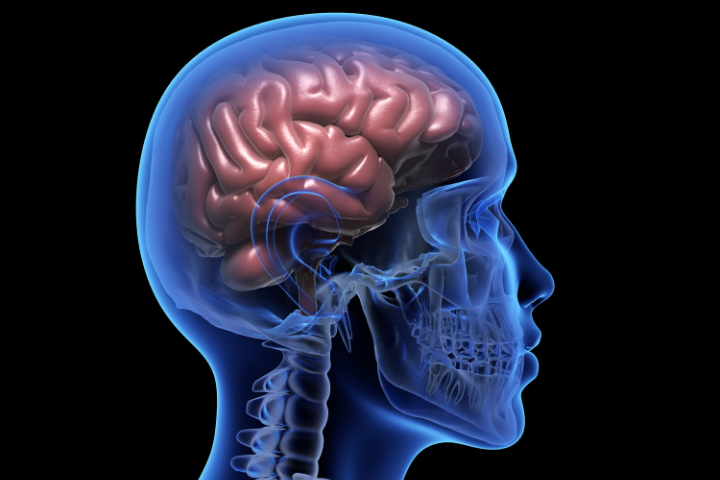
- Investigate how the nervous system and brain enable behaviour and mental processes, including the role of neurons, neurotransmitters, and the physiological response to stress.
- Explore how humans learn and form memories, examining key psychological models and factors that influence the acquisition, storage, and retrieval of information.
- Study mental wellbeing and mental health, including how psychological disorders are understood, diagnosed, and managed, and how social, cognitive, and biological factors interact to influence behaviour.
Subject Code: V2SPS
Year Level: 12
Unit 3: How does experience affect behaviour and mental processes?
Students will:
- Analyse how the functioning of the human nervous system enables a person to interact with the external world, and evaluate the different ways in which stress can affect psychobiological functioning.
- Apply different approaches to explain learning to familiar and novel contexts and discuss memory as a psychobiological process.
Unit 4: How is mental wellbeing supported and maintained?
Students will:
- Analyse the demand for sleep and evaluate the effects of sleep disruption on a person’s psychological functioning.
- Discuss the concept of mental wellbeing, apply a biopsychosocial approach to explain the development and management of specific phobia, and discuss protective factors that contribute to the maintenance of mental wellbeing.
- Design and conduct a scientific investigation related to mental processes and psychological functioning, and present an aim, methodology and method, results, discussion and conclusion in a scientific poster.
Assessment
- Coursework
- Topic tests
- Extended practical investigation
- End of year exam
What sort of student would like Psychology?
Someone who:
- Is interested in human behaviour, the way we think, learn, and relate and how we become the ‘person’ we are
- Aspires to study areas of health, health science, or health promotion
- Uses the scientific method to establish what we know about human behaviour.
Prerequisites
Psychology Unit 1 and 2 are suggested for Unit 3 and 4.